Last updated: Aug 20, 2026
The Next Generation of Machine Vision
A guide to industrial image processing: fundamentals, applications, and benefits of AI-based methods for precise, automated visual inspection and greater efficiency in manufacturing companies.

Last updated: Aug 20, 2026
The Next Generation of Machine Vision
A guide to industrial image processing: fundamentals, applications, and benefits of AI-based methods for precise, automated visual inspection and greater efficiency in manufacturing companies.
Last updated: Aug 20, 2026
The Next Generation of Machine Vision
A guide to industrial image processing: fundamentals, applications, and benefits of AI-based methods for precise, automated visual inspection and greater efficiency in manufacturing companies.
What is machine vision?
What is machine vision?
What is machine vision?
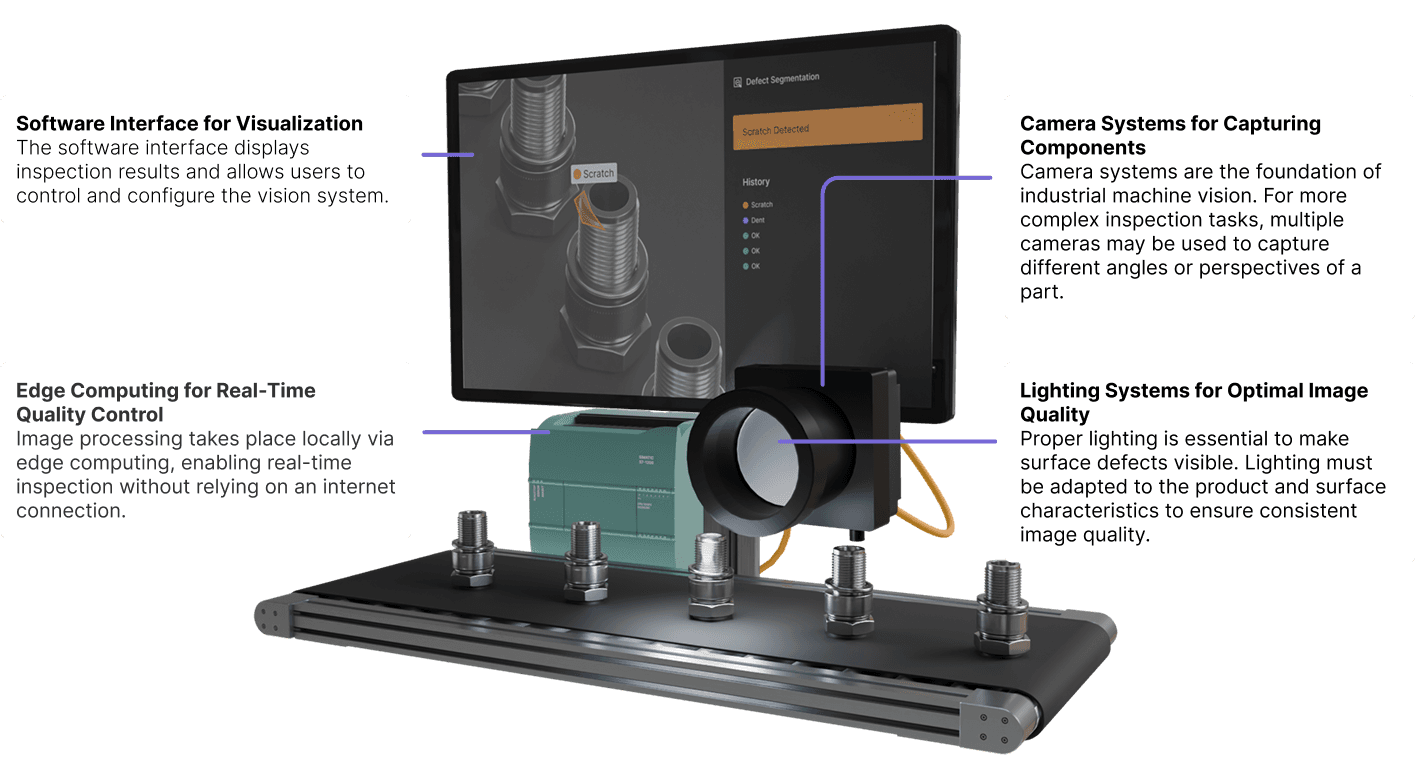
Industrial machine vision systems capture images via cameras and automatically evaluate them using software. The goal is to detect defects, identify objects, track parts, determine positions, inspect dimensions, or read codes – all without human intervention and even at short cycle times.
While traditional systems operate on hard-coded rules, modern solutions rely on AI-based image processing. This leverages machine learning to learn from sample data and remains robust even in the face of potential production deviations, surface variations, or new geometries.
A typical machine vision system in manufacturing consists of several core components:
Where is industrial machine vision used?
Where is industrial machine vision used?
Where is industrial machine vision used?
Manufacturing companies
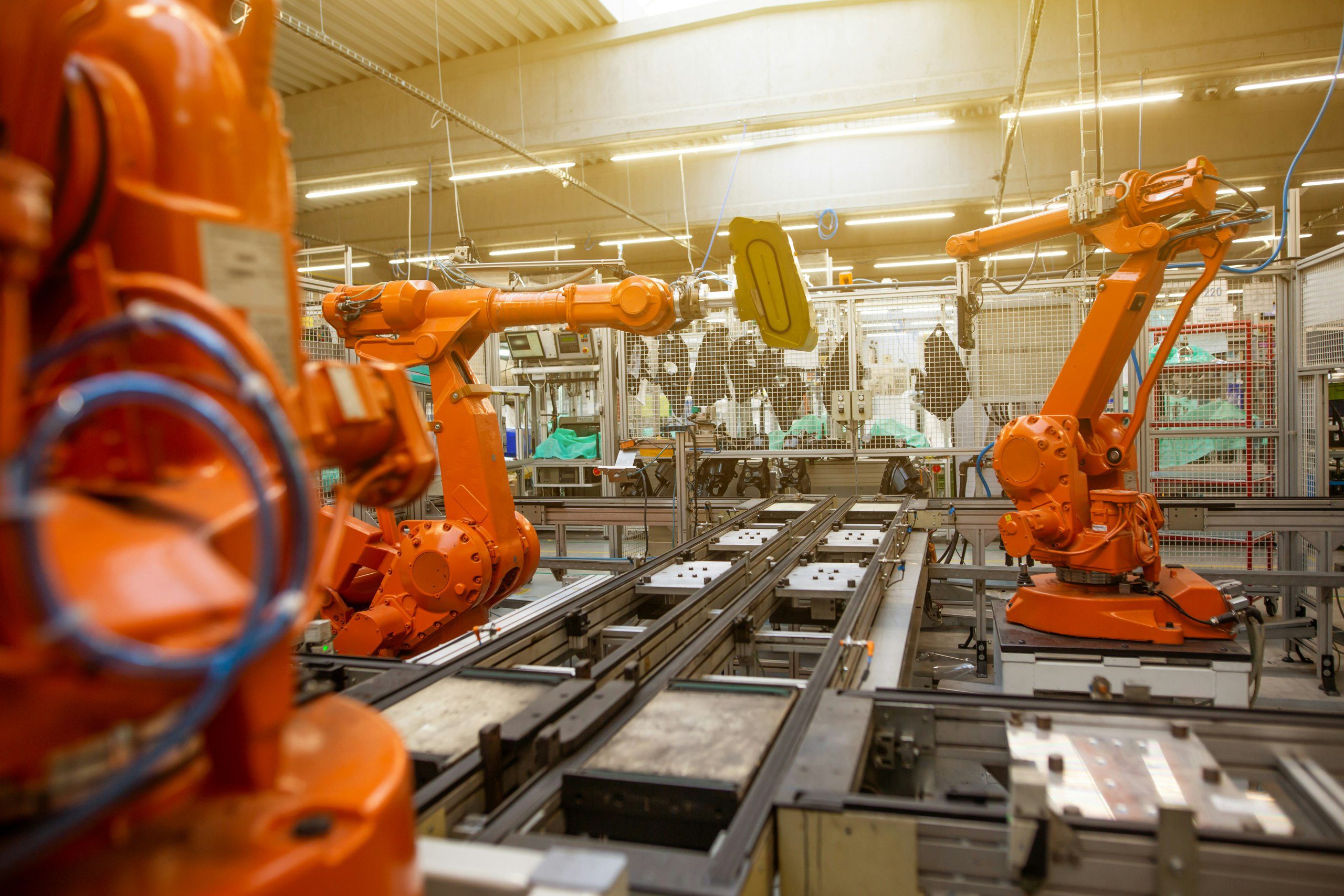
In manufacturing, industrial machine vision enables automated quality control of components, e.g. to detect surface defects or inspect dimensional deviations. It thus also enables continuous monitoring of product quality.
Manufacturing companies
In manufacturing, industrial machine vision enables automated quality control of components, e.g. to detect surface defects or inspect dimensional deviations. It thus also enables continuous monitoring of product quality.
Manufacturing companies
In manufacturing, industrial machine vision enables automated quality control of components, e.g. to detect surface defects or inspect dimensional deviations. It thus also enables continuous monitoring of product quality.

Logistics service providers
In logistics, machine vision is used, among other things, to identify, count, and sort packages or components. It enables efficient process automation and supports seamless traceability in the flow of goods.
Logistics service providers
In logistics, machine vision is used, among other things, to identify, count, and sort packages or components. It enables efficient process automation and supports seamless traceability in the flow of goods.
Logistics service providers
In logistics, machine vision is used, among other things, to identify, count, and sort packages or components. It enables efficient process automation and supports seamless traceability in the flow of goods.

Agriculture
In agriculture, machine vision is used to detect, sort, and assess the quality of harvested crops. For example, it identifies ripeness levels, damage, or foreign bodies, and can also assist in automated weed detection and removal.
Agriculture
In agriculture, machine vision is used to detect, sort, and assess the quality of harvested crops. For example, it identifies ripeness levels, damage, or foreign bodies, and can also assist in automated weed detection and removal.
Agriculture
In agriculture, machine vision is used to detect, sort, and assess the quality of harvested crops. For example, it identifies ripeness levels, damage, or foreign bodies, and can also assist in automated weed detection and removal.
What does industrial machine vision achieve?
What does industrial machine vision achieve?
What does industrial machine vision achieve?
Industrial machine vision is used in manufacturing to automatically inspect components for defects, dimensional deviations, or completeness. This enables continuous monitoring of product quality.
Paste SVG
Defect detection
With machine vision systems, visible defects such as scratches, cracks, or contamination can be reliably detected and classified.
Paste SVG
Object recognition
Machine vision systems identify components in the field of view based on characteristic features such as shape, color, or contour to inspect for completeness.
Paste SVG
Metrology
Dimensions such as length, width, distances, or angles are determined directly from the image material without the need for physical contact.
Paste SVG
Positioning
The exact position or alignment of an object is captured in order to detect potential errors or to correctly process it further afterwards.
Paste SVG
Code reading
Machine-readable codes such as barcodes or data matrix codes can be detected and read automatically, even at very short cycle times.
Paste SVG
Text recognition (OCR)
Optical character recognition enables the automatic capture of printed text such as serial numbers, batches, or label content.
Paste SVG
Defect detection
With machine vision systems, visible defects such as scratches, cracks, or contamination can be reliably detected and classified.
Paste SVG
Object recognition
Machine vision systems identify components in the field of view based on characteristic features such as shape, color, or contour to inspect for completeness.
Paste SVG
Metrology
Dimensions such as length, width, distances, or angles are determined directly from the image material without the need for physical contact.
Paste SVG
Positioning
The exact position or alignment of an object is captured in order to detect potential errors or to correctly process it further afterwards.
Paste SVG
Code reading
Machine-readable codes such as barcodes or data matrix codes can be detected and read automatically, even at very short cycle times.
Paste SVG
Text recognition (OCR)
Optical character recognition enables the automatic capture of printed text such as serial numbers, batches, or label content.
Paste SVG
Defect detection
With machine vision systems, visible defects such as scratches, cracks, or contamination can be reliably detected and classified.
Paste SVG
Object recognition
Machine vision systems identify components in the field of view based on characteristic features such as shape, color, or contour to inspect for completeness.
Paste SVG
Metrology
Dimensions such as length, width, distances, or angles are determined directly from the image material without the need for physical contact.
Paste SVG
Positioning
The exact position or alignment of an object is captured in order to detect potential errors or to correctly process it further afterwards.
Paste SVG
Code reading
Machine-readable codes such as barcodes or data matrix codes can be detected and read automatically, even at very short cycle times.
Paste SVG
Text recognition (OCR)
Optical character recognition enables the automatic capture of printed text such as serial numbers, batches, or label content.
Industrial machine vision is used in manufacturing to automatically inspect components for defects, dimensional deviations, or completeness. This enables continuous monitoring of product quality.
Discover how easily you can solve various inspection tasks with Maddox AI.
Discover Maddox AI software
Discover how easily you can solve various inspection tasks with Maddox AI.
Discover Maddox AI software
Advantages of industrial machine vision
Advantages of industrial machine vision
Advantages of industrial machine vision
Increase production throughput and efficiency
Higher productivity: Machine vision shortens manual inspection times and enables consistently fast processes – even at high cycle rates.
Avoid pseudo scrap: Defect-free parts are correctly recognized through precise image analysis, which reduces unnecessary scrap and saves material.
Scalable inspection processes: Vision systems can be flexibly adapted to new components, variants, or production volumes, and easily scaled to additional lines.
Increase production throughput and efficiency
Higher productivity: Machine vision shortens manual inspection times and enables consistently fast processes – even at high cycle rates.
Avoid pseudo scrap: Defect-free parts are correctly recognized through precise image analysis, which reduces unnecessary scrap and saves material.
Scalable inspection processes: Vision systems can be flexibly adapted to new components, variants, or production volumes, and easily scaled to additional lines.
Boost Production Performance and Efficiency
Higher productivity: Machine vision shortens manual inspection times and enables consistently fast processes – even at high cycle rates.
Avoid pseudo scrap: Defect-free parts are correctly recognized through precise image analysis, which reduces unnecessary scrap and saves material.
Scalable inspection processes: Vision systems can be flexibly adapted to new components, variants, or production volumes, and easily scaled to additional lines.
Ensure quality and increase customer satisfaction
Consistent product quality: Automated and objective inspection ensures that every component meets quality standards – with traceable, consistent results.
Fewer complaints: Defective parts are reliably detected before they enter the supply chain. This significantly lowers the complaint rate.
Higher customer satisfaction: Lower defect rates, reliable delivery quality, and transparent inspection processes sustainably strengthen your customers' trust.
Ensure quality and increase customer satisfaction
Consistent product quality: Automated and objective inspection ensures that every component meets quality standards – with traceable, consistent results.
Fewer complaints: Defective parts are reliably detected before they enter the supply chain. This significantly lowers the complaint rate.
Higher customer satisfaction: Lower defect rates, reliable delivery quality, and transparent inspection processes sustainably strengthen your customers' trust.
Boost Production Performance and Efficiency
Consistent product quality: Automated and objective inspection ensures that every component meets quality standards – with traceable, consistent results.
Fewer complaints: Defective parts are reliably detected before they enter the supply chain. This significantly lowers the complaint rate.
Higher customer satisfaction: Lower defect rates, reliable delivery quality, and transparent inspection processes sustainably strengthen your customers' trust.
Boost cost efficiency
Cost savings in production: Less pseudo scrap, reduced rework effort, and a declining need for manual inspections – machine vision lowers costs on multiple levels.
Counteract skilled labor shortage: Automated inspection systems take over tasks for which it is becoming increasingly difficult to find qualified personnel.
Data-driven process optimization: AI-powered vision systems deliver valuable data that you can use to continuously improve your production processes.
Boost cost efficiency
Cost savings in production: Less pseudo scrap, reduced rework effort, and a declining need for manual inspections – machine vision lowers costs on multiple levels.
Counteract skilled labor shortage: Automated inspection systems take over tasks for which it is becoming increasingly difficult to find qualified personnel.
Data-driven process optimization: AI-powered vision systems deliver valuable data that you can use to continuously improve your production processes.
Boost Production Performance and Efficiency
Cost savings in production: Less pseudo scrap, reduced rework effort, and a declining need for manual inspections – machine vision lowers costs on multiple levels.
Counteract skilled labor shortage: Automated inspection systems take over tasks for which it is becoming increasingly difficult to find qualified personnel.
Data-driven process optimization: AI-powered vision systems deliver valuable data that you can use to continuously improve your production processes.
Advantages of AI in industrial machine vision
Advantages of AI in industrial machine vision
Advantages of AI in industrial machine vision
Artificial intelligence is driving the next generation of industrial machine vision by optimizing its core function: automated quality inspection. This advancement directly contributes to key manufacturing goals – higher efficiency, improved product quality, and reduced costs.
Easy operation
Unlike rule-based systems, deep learning solutions do not require in-depth expert knowledge in machine vision. They can be set up quickly and easily directly in your own facility, without the need for external resources.
Easy operation
Unlike rule-based systems, deep learning solutions do not require in-depth expert knowledge in machine vision. They can be set up quickly and easily directly in your own facility, without the need for external resources.
Boost Production Performance and Efficiency
Unlike rule-based systems, deep learning solutions do not require in-depth expert knowledge in machine vision. They can be set up quickly and easily directly in your own facility, without the need for external resources.
Reliable inspection of complex tasks
AI-based machine vision can detect complex or irregular defect patterns where rule-based systems often fail. This enables reliable automation of demanding inspection tasks, reduces pseudo scrap, and lowers costs – while maintaining consistently high product quality.
Reliable inspection of complex tasks
AI-based machine vision can detect complex or irregular defect patterns where rule-based systems often fail. This enables reliable automation of demanding inspection tasks, reduces pseudo scrap, and lowers costs – while maintaining consistently high product quality.
Boost Production Performance and Efficiency
AI-based machine vision can detect complex or irregular defect patterns where rule-based systems often fail. This enables reliable automation of demanding inspection tasks, reduces pseudo scrap, and lowers costs – while maintaining consistently high product quality.
Greater flexibility
AI vision systems can be flexibly adapted to new products or changed defect patterns. This minimizes setup times and saves valuable time and resources in dynamic manufacturing environments.
Greater flexibility
AI vision systems can be flexibly adapted to new products or changed defect patterns. This minimizes setup times and saves valuable time and resources in dynamic manufacturing environments.
Boost Production Performance and Efficiency
AI vision systems can be flexibly adapted to new products or changed defect patterns. This minimizes setup times and saves valuable time and resources in dynamic manufacturing environments.
Industrial machine vision as the key to greater efficiency in manufacturing
Industrial machine vision as the key to greater efficiency in manufacturing
Industrial machine vision as the key to greater efficiency in manufacturing
With increasing product complexity and growing quality requirements, the next generation of machine vision is becoming a key technology for modern manufacturing facilities. Through precise defect detection and digital data capture, quality control turns into a valuable source of information for continuous process improvement.

With Maddox AI, you make data usable and maximize your yield – completely without investment risk.
Discover Maddox AI software
With Maddox AI, you make data usable and maximize your yield – completely without investment risk.
Discover Maddox AI software
Frequently Asked Questions
Frequently Asked Questions
What is industrial machine vision?
Industrial machine vision refers to the use of camera systems and software to automate visual inspection in manufacturing. Typical applications include defect detection, measurement, object recognition, and code reading.
How does industrial machine vision differ from conventional quality control?
How does AI-based machine vision differ from traditional systems?
What are the benefits of using AI in machine vision?
Is AI-based machine vision only suitable for large companies?
How can machine vision be integrated into existing production lines?
How much effort is required to implement an AI-based machine vision system?
How does Maddox AI support companies in implementing machine vision?
Bismarckstraße 136, 72072 Tübingen
+49 159 01479 983
info@maddox.ai
Industries

We are ISO 27001 certified.
Bismarckstraße 136, 72072 Tübingen
+49 159 01479 983
info@maddox.ai
Industries
We are ISO 27001 certified.
Bismarckstraße 136, 72072 Tübingen
+49 159 01479 983
info@maddox.ai
Industries
We are ISO 27001 certified.